Tokyo · food tour decision
Choose the neighborhood before you choose the tour.
Tsukiji is a morning market, Asakusa pairs snacks with tradition, and Shinjuku turns dinner into a night out.
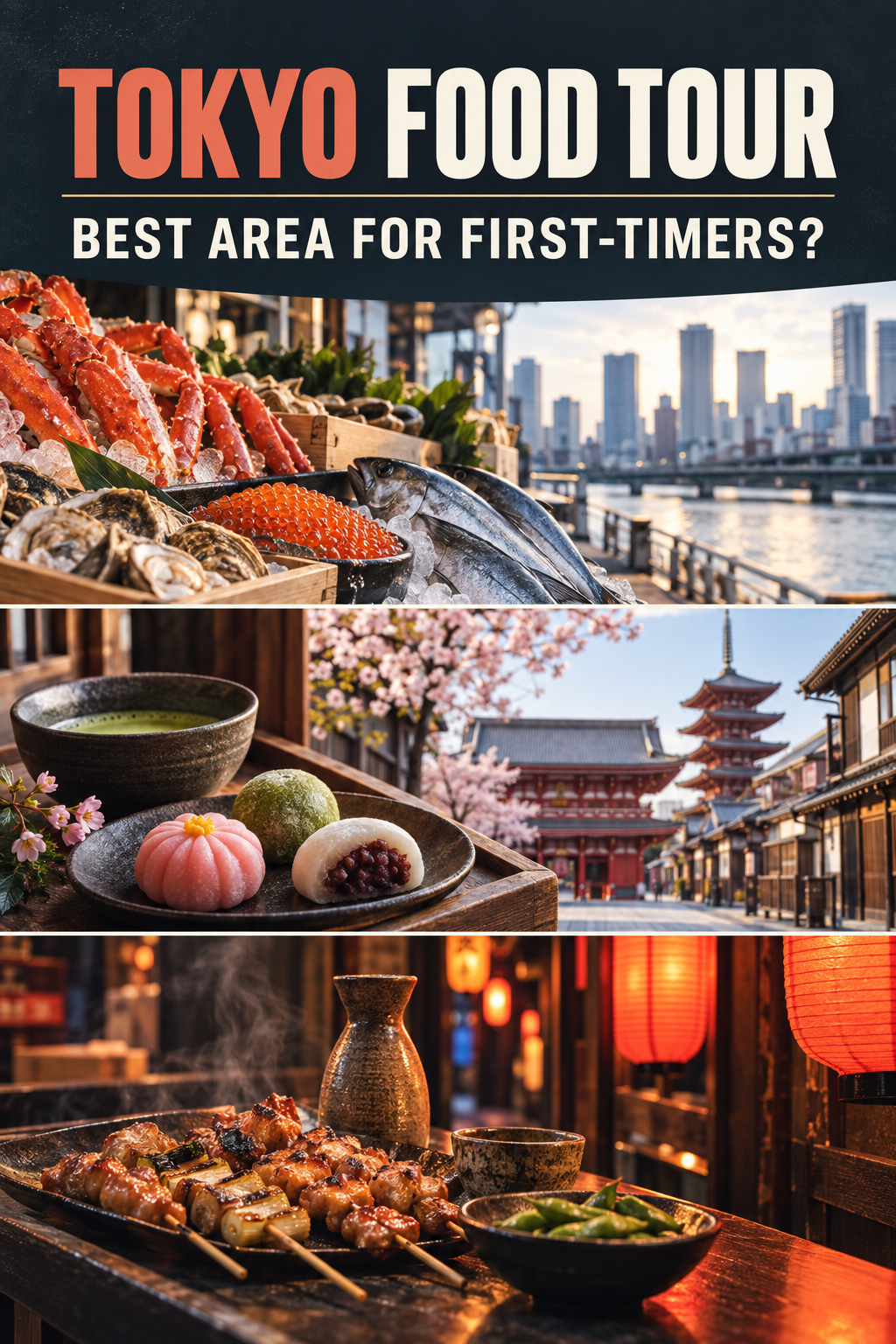
A “Tokyo food tour” is not one experience. The neighborhood decides whether your three hours feel like breakfast in a working market, a cultural walk with snacks, or dinner in a maze of tiny bars.
Choose by the atmosphere and time slot you actually want. Review counts and the number of tastings matter less if the tour occupies the wrong part of your day.
Three areas, three different jobs
Choose it for seafood and a useful morning
Best time: Morning · roughly 2–3 hours
Expect: Sushi, shellfish, tamagoyaki, tea, market snacks
Best for: Curious eaters who want context in a dense working market
Check first: Many shops close early; Wednesdays, Sundays, and holidays can be poor choices.
Choose it for tradition, sweets, and sightseeing
Best time: Late morning or afternoon · roughly 2–3 hours
Expect: Rice crackers, matcha, wagashi, melon bread, savory street foods
Best for: First-timers who want food woven into an easy cultural half-day
Check first: Nakamise can feel crowded; the best tours move beyond the obvious stalls.
Choose it for dinner and the city after dark
Best time: Evening · roughly 3 hours
Expect: Izakaya dishes, yakitori, sushi, sake, regional small plates
Best for: Travelers who want help entering small venues and navigating nightlife
Check first: Check alcohol, dietary, age, and last-train details before booking.
Tsukiji: the clearest food-first choice
Choose Tsukiji if seafood is the point and you are happy to begin early. The former inner wholesale market moved to Toyosu in 2018, but the Outer Market remains a dense cluster of roughly 460 shops selling seafood, seasonings, kitchenware, and prepared food.
A guide adds value by explaining what you are seeing, finding a sensible tasting order, and keeping a small group from blocking narrow working lanes. Do not expect an all-day street-food district: Tokyo's official guide says the market is liveliest from about 9 a.m. to 1 p.m., many businesses close earlier than typical restaurants, and eating while walking is discouraged.
Read the current Tsukiji visitor guidance
Tsukiji Fish Market Food Tour with 6+ Tastings
Viator currently lists this small-group English-language market tour at about 2.5 hours with seafood-focused tastings. The route, menu, inclusions, dietary accommodation, accessibility, and cancellation terms can change. Japan Unrushed has not personally tested this tour.
If you book through this link, Japan Unrushed may earn a commission at no extra cost to you.
Check dates and current price on ViatorAsakusa: the easiest cultural half-day
Choose Asakusa when food is one part of the story. Senso-ji, Nakamise, older shopping streets, traditional snacks, and nearby Kappabashi make the district easy to understand on a first visit. It is the best fit for someone who wants a guide to connect what they taste with Edo-era customs and neighborhood history.
The tradeoff is focus. Asakusa tours may include more walking and sightseeing, with fewer substantial dishes than a dinner tour. Confirm whether the listed tastings replace lunch or amount to snacks.
See Tokyo's official Asakusa overview
Asakusa Highlights: Street Food Crawl
Viator currently describes this as an approximately two-hour English-language crawl with several local bites. Check the live listing for the precise menu, alcohol inclusion, dietary fit, walking distance, and cancellation terms. Japan Unrushed has not personally tested this tour.
If you book through this link, Japan Unrushed may earn a commission at no extra cost to you.
Check dates and current price on ViatorShinjuku: the strongest case for a guide
Choose Shinjuku when you want dinner and nightlife together. The district's value is not one famous food; it is the range of izakaya, compact counters, restaurant floors, Kabukicho streets, and small alley venues packed around an enormous station.
This is where a guide can remove the most friction: finding the meeting point, ordering a varied meal, explaining table customs, and entering places that may feel opaque alone. It is also the least calm choice. If neon, alcohol, crowds, or a late finish sound draining, use Tsukiji or Asakusa instead.
See Tokyo's official Shinjuku overview
Shinjuku Food Tour: 13 Dishes at 4 Local Eateries
Viator currently lists this as an approximately three-hour English-language evening with multiple dishes and drinks across several venues. Confirm age rules, alcohol substitutions, dietary restrictions, accessibility, exact meeting point, and the current cancellation policy. Japan Unrushed has not personally tested this tour.
If you book through this link, Japan Unrushed may earn a commission at no extra cost to you.
Check dates and current price on ViatorCheck these before paying
- 01
Is it a meal or tastings? Count the substantial stops, not just the number of samples.
- 02
Can they handle your diet? Vegetarian, vegan, halal, kosher, gluten-free, and allergy needs are not interchangeable. Ask the operator directly before booking.
- 03
Are drinks included? Confirm alcohol, non-alcoholic substitutions, and minimum-age rules.
- 04
Where does it end? A late Shinjuku finish and an early Tsukiji start affect the rest of your itinerary differently.
The rule to keep
Morning market, cultural afternoon, or night out.
Choose the time-and-neighborhood combination first. Then compare the live tour details inside that lane.
Place it in the trip
A food tour works best when it replaces a meal and supports the neighborhood you already planned to visit—not when it creates another cross-city journey.