Kyoto culture · first visit
A tea ceremony without the etiquette anxiety.
You do not need to know every movement. You need the right format, a patient host, and enough context to notice what is happening.
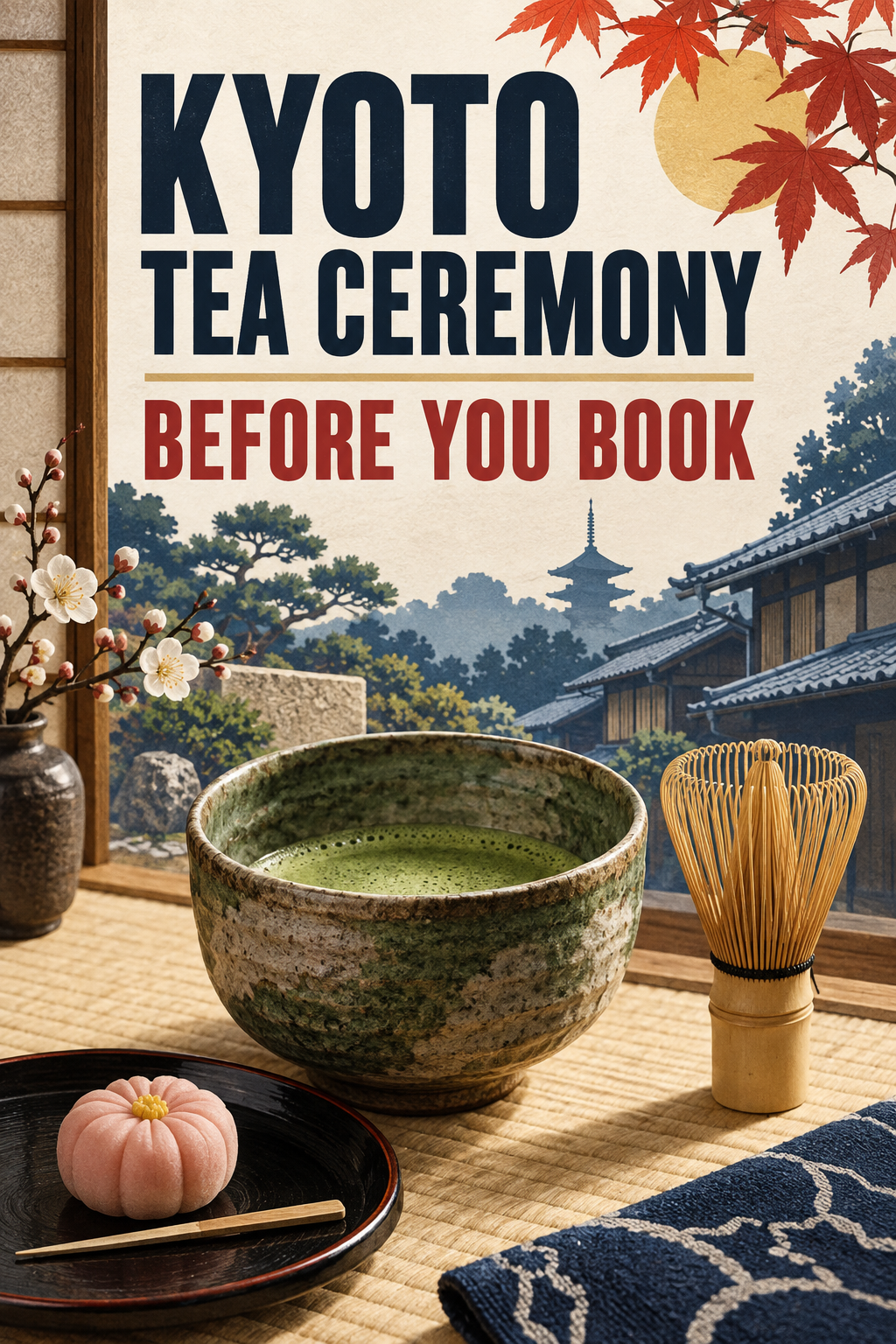
Japanese tea ceremony turns the preparation of matcha into a carefully ordered expression of hospitality. The exact movements vary by school, but respect, attention and seasonality matter more than performing perfectly.
Visitor experiences are designed for newcomers. Japan's tourism board notes that minor mistakes are generally overlooked and that many venues offer abbreviated sessions suitable for international guests.
Cultural reference: Japan National Tourism Organization
What usually happens
- ArriveEnter quietly
You may remove your shoes and sit on tatami or a chair, depending on the venue.
- ObserveWatch the host
The utensils are cleaned and the matcha is prepared through a deliberate sequence of movements.
- TasteSweet, then tea
A seasonal sweet often balances the bitterness of matcha. Follow the host's timing.
- ParticipateTry the steps
Many visitor sessions invite you to whisk tea or practice how to receive the bowl.
Check these before booking
- Language
Confirm that guidance is offered in English, not only a translated handout.
- Format
Choose a demonstration if you want to observe; choose hands-on if you want to whisk your own matcha.
- Seating
Ask about chairs if kneeling on tatami would be uncomfortable. Accessibility varies by venue.
- Duration
Short visitor sessions can fit into a sightseeing day; formal tea gatherings can last much longer.
- Changes
Read the current cancellation policy and meeting instructions before paying.
What to wear—and what not to worry about
Wear
Clean, comfortable clothes that let you sit easily. Socks are a thoughtful choice in a tatami room.
Avoid
Strong fragrance, noisy jewelry, or clothing that makes floor seating difficult.
Ask
If you need a chair, have dietary concerns, or want to take photos, confirm before the ceremony begins.
JNTO also features beginner-friendly Kyoto experiences where an English-speaking host guides each step. See the official example
A bookable example
A guided session makes sense if you want cultural context, clear English instructions, and a reserved place in your Kyoto day. Skip it if you prefer to encounter matcha casually at a café or do not enjoy structured group activities.
Traditional Tea Ceremony with Matcha and Sweets
Viator currently lists this Kyoto experience at approximately one hour, offered in English, with matcha and sweets. Group size, price, availability, accessibility and cancellation terms can change, so confirm the current listing before booking. Japan Unrushed has not personally tested this experience; it is presented as a well-reviewed candidate for travelers who want a compact introduction.
If you book through this link, Japan Unrushed may earn a commission at no extra cost to you.
Check dates and current price on ViatorThe rule to keep
Curiosity is better preparation than perfect etiquette.
Choose a session that welcomes beginners, arrive on time, watch the host, and let the ritual slow the day down.